To style a tray on a coffee table, set the tray down first as the border, then fill it with three things of different heights: something tall such as a small vase or a lantern, something mid-height such as a mabkhara or a jar, and something low such as coasters or a book, and leave about a third of the tray clear. If the tray carries calligraphy, keep what sits on it plain so the words can be read. A console table is the handshake of a home. It is the first surface a guest passes, and often the last thing you glance at on the way out. A coffee table works differently — people sit with it, reach across it, put things down on it — but both reward the same thinking: a few considered pieces, arranged with intent, beating a crowd of ornaments.
Here is how we style ours at MASHQ.
Start with height, not objects
The most common styling mistake is choosing beautiful pieces that are all the same height. The eye needs somewhere to travel. Work with three tiers: something tall at roughly two-thirds the height of whatever hangs above, something mid-height, and something low and horizontal.
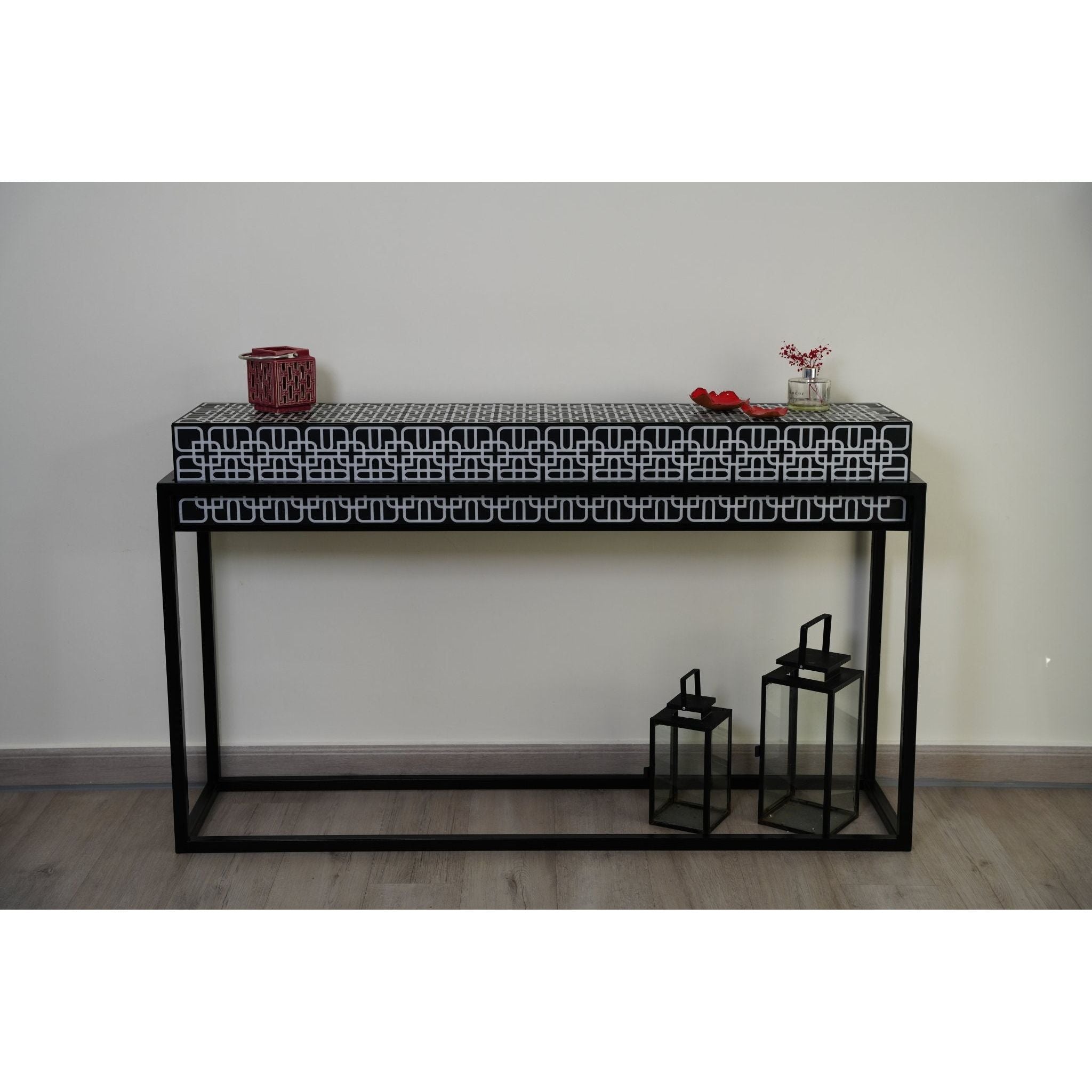
On a console that might read as a mirror or wall panel above, a lantern or mabkhara at mid-height, and a tray flat on the surface. On a coffee table you lose the wall, so the tall element becomes a small vase or a stack of books, and the tray does the grounding.
Group in odd numbers, and let them touch
Three objects read as a composition. Four read as a set. Odd numbers create a small visual tension that keeps the arrangement alive.
Just as important: let pieces overlap slightly from the viewer's angle. A row of evenly spaced items looks like a shop shelf. A cluster where a jar sits partly in front of a lantern looks like someone lives there.
 Console with Black and White Flowers Pattern
Dhs. 2,390
Console with Black and White Flowers Pattern
Dhs. 2,390
 «دار السعادة» — Acrylic Serving Tray · Diwani
From Dhs. 115
«دار السعادة» — Acrylic Serving Tray · Diwani
From Dhs. 115
 Arabesque Ornamentation Box
From Dhs. 105
Arabesque Ornamentation Box
From Dhs. 105
Give calligraphy room to breathe
Arabic calligraphy is not a pattern — it is a line with rhythm and direction, and it needs space around it to be read as such. A calligraphy tray or panel is the loudest thing on the table even when it is the most restrained in colour.
So if a piece carries script, let it lead. Keep what surrounds it plain: a solid-colour box, an undecorated jar, a plant. Two pieces of calligraphy competing on one surface cancel each other out.
The tray is the anchor
A tray is the single most useful object in console and coffee-table styling, because it draws a border. Everything inside it becomes one visual unit rather than five scattered items, and the whole group can be lifted away when you need the surface.
On a coffee table, a tray corrals the things that would otherwise drift — remote, candle, coasters — and makes them look deliberate. On a console it gives keys and post somewhere to land that is not simply the wood.
Leave a third of the surface empty
Negative space is not wasted space. As a rule of thumb, aim to leave about a third of the surface clear. It reads as calm rather than sparse, and it leaves somewhere to actually put a cup down — which matters more than any styling rule.
This is doubly true in apartments. A crowded console in a compact hallway makes the whole space feel tighter than it is.
Think about the reflection
If there is a mirror above your console, remember that everything on the surface appears twice. Check the arrangement from the doorway, not from directly in front of it. Pieces with an open, fretwork structure — mashrabiya panels, lanterns — read especially well here, because the mirror catches the light through them.
Change one thing by season
You do not need a different table for Ramadan, Eid and the rest of the year. Keep the anchor pieces — the tray, the mirror, the larger jar — and swap the one or two smaller items that carry the occasion. A Ramadan Kareem box in the holy month, a lantern set through Eid, a personalised piece the rest of the year.
It costs less, it stores more easily, and the room keeps its character instead of being redecorated four times a year.
A quick checklist
- Three heights: tall, mid, low
- Odd numbers, slightly overlapping
- One piece of calligraphy leading, the rest quiet
- A tray to draw the border
- About a third of the surface left clear
- Checked from the doorway, not head-on
Every MASHQ piece is made to order in our UAE workshop, so sizes and finishes can be matched to the surface you are styling. If you are unsure what proportion will work, send us the dimensions and a photo — we would rather help you choose well than sell you something that does not fit.
Keep reading: 5 Easy Ways to Refresh Your Home Décor · Creating a Warm, Welcoming Home. The trays and boxes in this guide are in serving trays. Want to see the words before you order? Set them yourself in Mashq Studio, free, in six scripts.
Part of our room-by-room guide: Arabic Calligraphy Wall Art: Ideas for Every Room.