To use a mabkhara with charcoal, light a charcoal disc at its edge with tongs, wait until it is covered in grey ash, set it in the burner and place one small piece of bakhoor on top; let the scent rise for a few minutes, then carry the burner through the room. An electric burner needs no charcoal: switch it on and put the bakhoor on its heated plate. A mabkhara is an incense burner, and in Gulf homes it is closer to a household fixture than an ornament. Bakhoor is burned to welcome guests, to mark the end of a meal, to scent clothing and majlis cushions, and on Fridays and holidays as a matter of habit.
If you have been given one, or are considering one, this is what is actually useful to know.
Bakhoor, oud and incense are not the same thing
These get used interchangeably in English and they are distinct.
- Oud is agarwood — resinous heartwood from the aquilaria tree. It is burned in chips and is the most prized and most expensive of the three.
- Bakhoor is a blend: wood chips soaked in fragrant oils, often with resin, sandalwood, musk or florals, pressed into bricks or small pieces. Softer, sweeter and far more affordable than pure oud.
- Incense sticks are a different tradition entirely and burn by themselves. Bakhoor and oud do not — they need a heat source.
Most daily use in the Gulf is bakhoor. Oud is brought out for occasions.
How to actually use one
Charcoal method, which is traditional:
- Light a charcoal disc at its edge, holding it with tongs — never fingers. It will spark, then settle.
- Wait until it is ashed over and glowing grey-white. Putting bakhoor on black charcoal scorches it and produces bitter smoke.
- Place the burner in its base and add one small piece of bakhoor. One. It is always more than you think.
- Let it scent the room for a few minutes, then carry it through the space or pass it among guests.
Electric burners skip the charcoal, heat a plate directly, and are the sensible choice in an apartment. Less ceremony, no live ember, no ash, and you can leave the room.
 Censers – Mabkhara, set of 3 or single
From Dhs. 85
Censers – Mabkhara, set of 3 or single
From Dhs. 85
 «الضيف عزيز» — Acrylic Serving Tray · Naskh
From Dhs. 115
«الضيف عزيز» — Acrylic Serving Tray · Naskh
From Dhs. 115
 «حياكم الله» — Acrylic Tissue Box
From Dhs. 130
«حياكم الله» — Acrylic Tissue Box
From Dhs. 130
Etiquette worth knowing
Bakhoor is often passed around after a meal or as guests prepare to leave. It is offered to each person in turn; the usual gesture is to waft the smoke toward yourself, or into hair and clothing, before passing it on.
In many households, being offered bakhoor is a gentle signal that the evening is drawing to a close. It is a warm gesture rather than a dismissal — worth recognising so you can take the cue.
Restraint is the whole skill
The most common mistake is using too much. Bakhoor is potent, and a room saturated with it stops being pleasant fairly quickly — especially in a closed, air-conditioned apartment.
One small piece, a few minutes, then let it fade. Scent that arrives at a moment is remembered; scent that is permanently present is not noticed and often overwhelming to a guest who has just walked in.
Choosing one
Three things matter more than looks:
- A stable base. A burner holding live charcoal must not be easy to knock over.
- Heat separation. Traditional burners use a bowl or foil layer between charcoal and body. Check yours has one, or use foil.
- Where it will live. If it is going to sit out permanently — which most do — it is furniture, and it should look like something you want to see every day.
For apartments, electric is easier and safer. For a majlis where the ritual is part of the hospitality, charcoal is the real thing.
Care
Let it cool completely before handling — burners hold heat far longer than they look like they do. Empty ash between uses so old residue does not taint the next scent. Wipe with a dry or barely damp cloth; avoid harsh cleaners on decorative finishes.
Never leave burning charcoal unattended, and keep it clear of curtains and low-hanging fabric.
As a gift
A mabkhara is a strong gift for a new home, a wedding or Eid, because it is used rather than displayed and it carries cultural weight without carrying religious obligation. Pairing the burner with a small quantity of good bakhoor makes it usable the day it arrives, which matters more than it sounds.
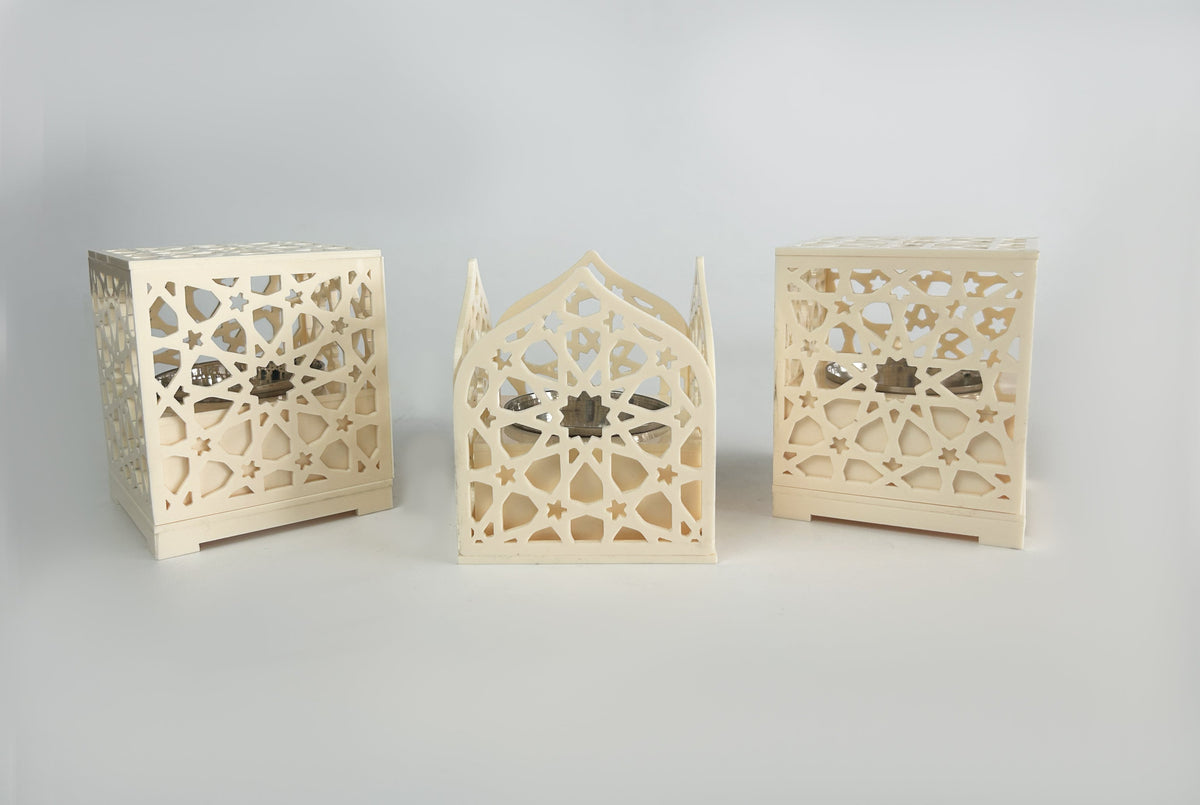
Ours are acrylic censers with a metal dispenser, cut and hand-finished in our UAE workshop: two shapes, Arabesque and Roundy, in beige or black, 10 cm each. A set of three is AED 195, and a single censer AED 85: enough for a small apartment, or to complete a set you already have. They sit well on a tray beside the dates and the coffee. If you are buying for someone in an apartment, ask us on WhatsApp and we will tell you honestly whether they suit the space.
Keep reading: Majlis Styling: Bringing Arabic Elegance to Your Living Space · New Home Gift Guide: Housewarming Gifts with an Arabic Touch. Want to see the words before you order? Set them yourself in Mashq Studio, free, in six scripts.
Part of our room-by-room guide: Arabic Calligraphy Wall Art: Ideas for Every Room.